Feng Shui Bedroom: The Complete Guide to Better Sleep, Energy & Harmony
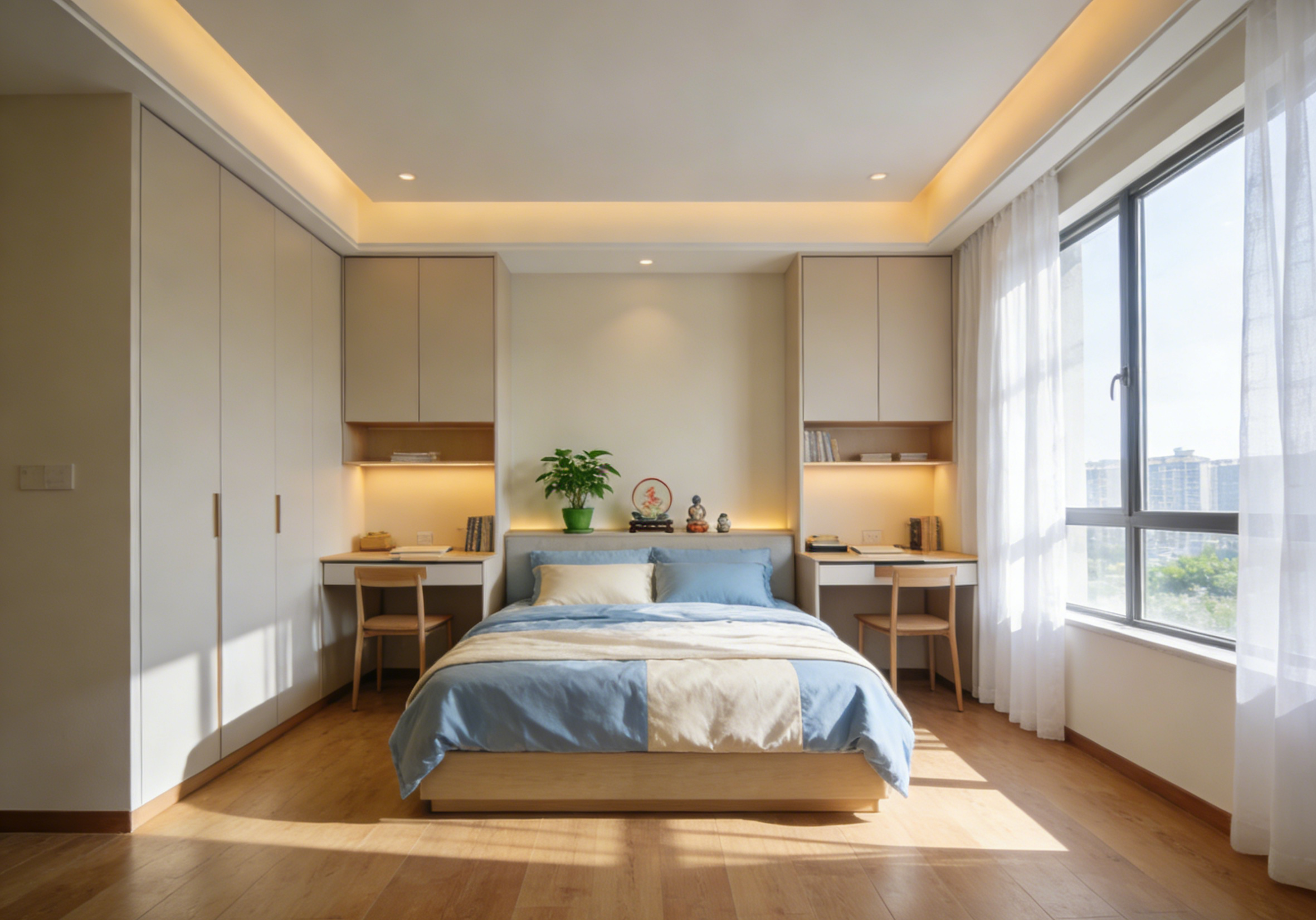
Your bedroom is the most personal space in your home — where you recharge, dream, and reconnect with yourself. Yet most people unknowingly sabotage their rest with poor layout, cluttered energy, and misplaced furniture.
Feng shui, the ancient Chinese art of spatial harmony, offers time-tested principles to transform your bedroom into a sanctuary of calm, vitality, and balance. And now, you don't have to guess whether your bedroom passes the test.
Take the Free Quick Check — 3 Minutes to Your Feng Shui ScoreIs Your Bedroom Feng Shui Friendly? Find Out in 3 Minutes
Most feng shui bedroom guides give you a long list of rules — but no way to know where you stand. Our Quick Check tool changes that.
Answer a few simple questions about your bedroom layout, and get:
- A personalized feng shui score (0–100)
- Your top 3 priority fixes ranked by impact
- Tailored tips based on your situation (single, couple, or family)
No sign-up required. No complicated charts. Just actionable results you can use tonight.
Why Feng Shui Bedroom Layout Actually Matters (Science Agrees)
You might think feng shui is just superstition — but modern research increasingly supports its core principles.
A 2023 narrative review published in Building and Environment (ScienceDirect) found a clear inter-relationship between bedroom design, indoor environmental quality, and sleep outcomes. The study highlighted that temperature, airflow, light exposure, and spatial arrangement all measurably affect how deeply and restfully we sleep.
Even more striking: a 2019 neuroarchitecture study published in Lippincott Journals used EEG brain monitoring to demonstrate that bed orientation directly influences sleep quality — providing hard science behind what feng shui practitioners have taught for centuries.
In feng shui terms, the goal is to optimize the flow of chi (life energy) through your bedroom. When chi flows smoothly, you sleep better, think more clearly, and feel more emotionally balanced. When it stagnates or rushes — from clutter, poor furniture placement, or energy "leaks" — the effects show up as insomnia, anxiety, and even relationship friction.
The bottom line: Whether you approach feng shui as philosophy or practicality, the layout of your bedroom shapes how you feel every single day.
The 7 Essential Feng Shui Bedroom Rules (Ranked by Impact)
Not all feng shui rules carry equal weight. Based on our analysis of expert consensus and scientific evidence, here are the 7 most impactful changes — ranked so you know where to start.
1. Command Your Position — The #1 Rule
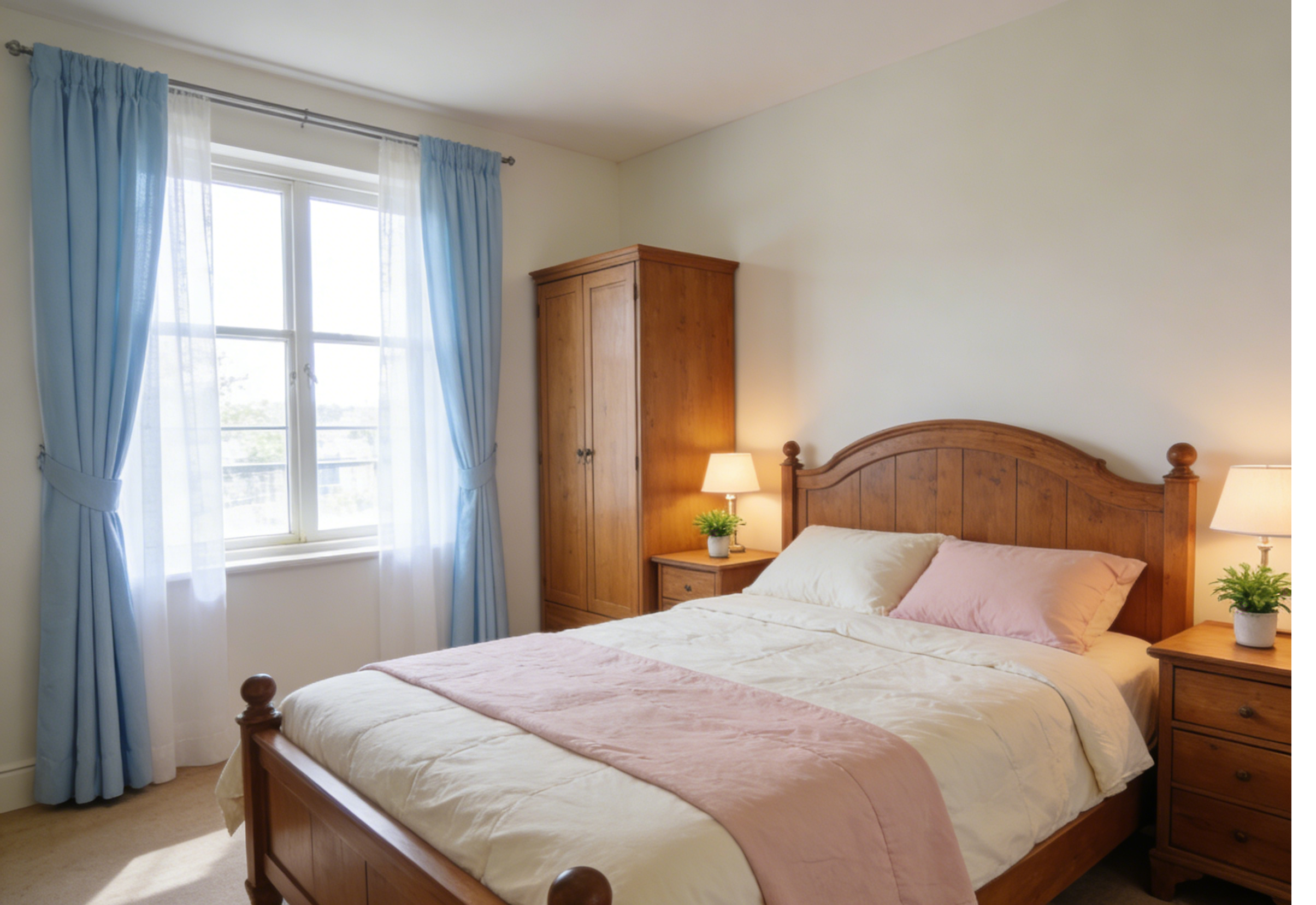
The commanding position is the single most important principle in feng shui bedroom design. It means placing your bed where you can see the door without being directly in line with it.
- Ideal: Bed diagonal to the main door, headboard against a solid wall
- Avoid: Bed aligned with the doorway (the "coffin position"), headboard against a window or floating in open space
- Why it works: Seeing the entrance from your bed creates a sense of psychological safety. Research in environmental psychology confirms that perceived control over one's environment reduces cortisol and improves sleep onset.
If your room layout makes the commanding position impossible, place a small mirror that lets you see the door's reflection from bed — without the mirror facing you directly.
2. Declutter for Calm Energy
Clutter is the enemy of good feng shui. Every pile of clothes, stack of papers, or overflowing drawer represents stagnant chi that weighs on your subconscious — even while you sleep.
Quick fixes:
- Apply the 3-item rule: keep no more than 3 objects on each bedside surface
- Clear the floor — especially the path between bed and door
- Remove or reorganize under-bed storage (soft items like linens are acceptable; electronics, shoes, and old documents are not)
A 2025 article from Stanford Lifestyle Medicine confirms that bedroom environment optimization — including clutter reduction — plays a significant role in sleep quality beyond stress management alone.
3. Mirror Placement — The Most Misunderstood Rule
Mirrors amplify energy. In a living room, that is helpful. In a bedroom, it can be disruptive.
Where to place mirrors:
- On a side wall that does not reflect the bed
- Inside closet doors
- In the entryway area of the bedroom
Where to avoid mirrors:
- Directly facing the bed (can cause restlessness and amplify anxiety)
- Opposite windows (creates excessive energy bounce)
Cannot move your mirror? Cover it at night with a cloth, use frosted film, or position a plant between the mirror and bed to break direct reflection.
4. Create Symmetry for Balance
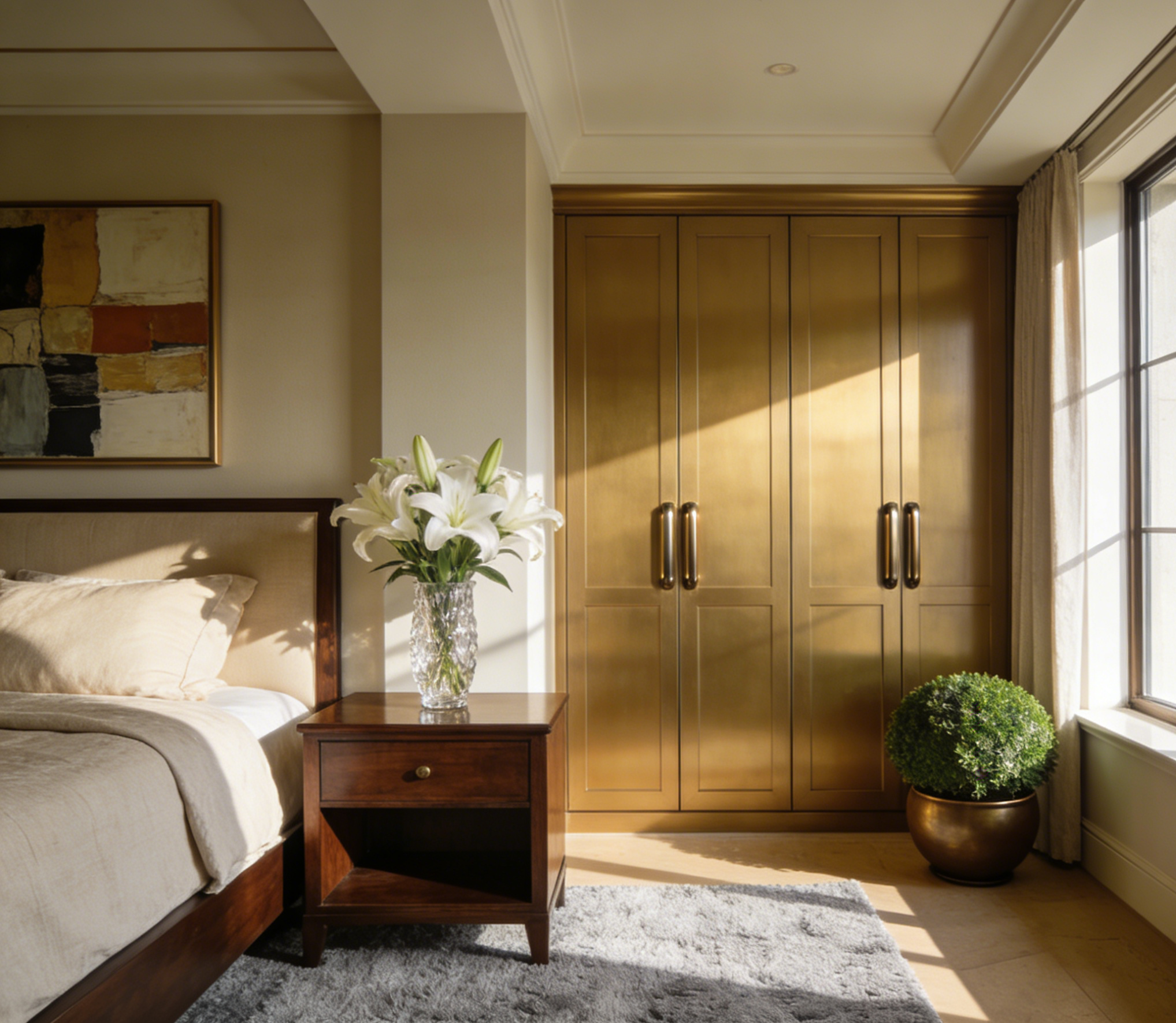
Symmetry in feng shui represents equilibrium — in relationships, health, and emotional stability.
- Use matching nightstands and lamps on both sides of the bed
- Hang artwork in balanced pairs or centered above the headboard
- Ensure both sides of the bed are accessible (avoid pushing one side against a wall)
This principle is especially important for couples, where physical imbalance in the room can subtly mirror emotional imbalance in the relationship.
5. Choose Calming Colors (Five Element Theory)
Feng shui bedroom colors are guided by the five elements — wood, fire, earth, metal, and water. For a bedroom, prioritize grounding and calming elements:
| Element | Colors | Energy Quality | Best For |
|---|---|---|---|
| Earth | Beige, sandy yellow, terracotta | Stability, nurturing | Restful sleep, grounding |
| Wood | Soft greens, sage | Growth, healing | Personal renewal, health |
| Water | Pale blues, aqua | Calm, emotional release | Stress relief, deep rest |
| Metal | Cream, light gray | Clarity, precision | Small bedrooms, mental focus |
| Fire | Blush, light pink | Warmth, intimacy | Romance, connection |
Avoid: Bold reds, neon colors, stark black-and-white contrasts — these create excessive yang energy that disrupts rest.
6. Remove Electronics and EMF Sources
Your bedroom should be a tech-free sanctuary. Screens emit blue light that suppresses melatonin, while charging devices and WiFi routers generate electromagnetic fields that some practitioners believe disrupt chi flow.
Practical steps:
- Remove TVs, laptops, and tablets from the bedroom
- Charge your phone outside the room or at least across the room — never under your pillow
- Replace digital alarm clocks with analog ones
- Hide cables in cord boxes or behind furniture
Research from Waseda University (2025) found that bedroom air quality — closely tied to electronic heat output and reduced ventilation — should maintain CO2 levels below 1,000 ppm for optimal sleep.
7. Bring Nature In (Mindfully)
Natural elements ground your bedroom's energy and connect the space to the outside world.
Recommended additions:
- Live plants: snake plant, peace lily, or bamboo (avoid cacti and spiky-leaved plants near the bed)
- Natural materials: wooden headboard, cotton or linen bedding, wool or jute rug
- Crystals: rose quartz for love, amethyst for calm, black tourmaline for protection
- Soft aromatherapy: lavender for sleep, sandalwood for grounding, ylang-ylang for intimacy
Key principle: Less is more. One or two well-chosen natural elements create harmony; too many create chaos.
Feng Shui Bedroom Tips by Life Situation
Your ideal feng shui bedroom setup depends on where you are in life. Here is how to customize the principles above for your specific situation.
For Singles Seeking Connection
- Place matched pairs of objects (candles, cushions, artwork) to invite partnership energy
- Keep both sides of the bed open and accessible — even if you sleep alone
- Add soft pink or peach accents (fire/earth blend) to activate romance chi
- Remove photos of solo activities; replace with images suggesting togetherness or nature
For Couples Strengthening Their Bond
- Ensure true symmetry: matched nightstands, equal space, balanced lighting
- Remove work items, exercise equipment, and anything that creates stress associations
- Place meaningful shared objects (travel photos, gifts to each other) in pairs
- Avoid family photos in the bedroom — this is your private space as a couple
For Families Seeking Peace
- If children share a bedroom, give each child their own defined "territory" with equal space
- Use earth tones for stability and grounding
- Minimize stimulating toys and colors visible from the sleeping area
- A solid headboard for each bed creates a sense of security
For Stress-Heavy Professionals Needing Better Sleep
- Prioritize the commanding position and tech removal above all else
- Use water-element colors (pale blue, aqua) for maximum calming effect
- Add a white noise machine or nature sounds (simulating flowing water chi)
- Consider blackout curtains — both for light control and to "seal" window energy at night
Feng Shui for Small Bedrooms: Make Any Space Work
Limited space does not mean limited energy. In fact, small bedrooms benefit enormously from feng shui because every object and placement choice has outsized impact.
Essential small-bedroom rules:
- Keep 18–24 inches of clear space on each side of the bed for chi flow
- Use dual-purpose furniture (bed with drawers, floating shelves, wall-mounted sconces)
- Choose a bed size that fits the room — do not let the mattress overwhelm the space
- One statement piece of art centered above the bed; skip gallery walls
- If the bed must go against a window, use a tall solid headboard and floor-length blackout curtains
A note on room shape: A 2026 study referenced by Bedstar found that room geometry affects mood — people in rectangular rooms reported more negative emotions than those in rooms with balanced proportions. If your bedroom is long and narrow, use a rug, lighting, or a room divider to create visual "zones" that break up the corridor effect.
The 3-Minute Quick Fix: If You Only Do 3 Things
Short on time? These three changes deliver the biggest feng shui impact with the least effort:
- Move your bed to the commanding position (or add a mirror to see the door)
- Clear your bedside surfaces down to 3 items each
- Remove or cover any mirror facing your bed
Do these tonight. Everything else can wait. But these three shifts alone can improve your sleep quality, reduce morning grogginess, and create a noticeably calmer feeling in your bedroom.
Want the Full Picture? Take Your Free Quick Check NowFrequently Asked Questions About Feng Shui Bedrooms
What is the best direction for your bed to face in feng shui?
According to traditional Eight Mansions theory, the ideal bed direction depends on your personal goals. East or southeast supports health and growth. Southwest promotes love and relationships. North encourages deep rest and career development. For personalized guidance, calculate your Kua number based on your birthdate — or use our Quick Check tool for an instant recommendation.
Can I have a mirror in my feng shui bedroom?
Yes — but placement matters. Avoid mirrors that directly face your bed, as they can bounce energy back onto you while sleeping. Place mirrors on side walls, inside closet doors, or in areas that reflect natural light without reflecting your sleeping body. If you cannot relocate a problematic mirror, covering it at night is an effective workaround.
Is feng shui just superstition or does it actually work?
Modern research validates many core feng shui principles. Studies on neuroarchitecture (Hekmatmanesh, 2019) demonstrate that bed orientation affects brain activity during sleep. Research on indoor environmental quality (Emmitt, 2023) confirms that bedroom design impacts sleep outcomes. Feng shui provides an intuitive framework for applying these evidence-based environmental principles.
How do I feng shui a small bedroom?
Focus on essentials: commanding position for the bed, minimal clutter, clear pathways on both sides, and symmetrical decor. Use vertical storage, wall-mounted lighting, and calming colors to make the space feel open. Avoid oversized furniture and keep under-bed areas clean or empty.
What colors are best for a feng shui bedroom?
Earth tones (beige, terracotta) provide grounding. Soft greens promote healing. Pale blues offer calm. Blush and light pink support romance. Avoid overly stimulating colors like bright red, neon shades, or high-contrast black and white.
What should I remove from my bedroom for good feng shui?
Remove: work-related items, exercise equipment, excessive electronics, clutter under the bed, dried or dead plants, mirrors facing the bed, and anything that creates stress or negative associations. Your bedroom should only contain items related to rest, relaxation, and connection.
More Feng Shui Resources
- Feng Shui Bedroom Layout: Room-by-Room Arrangement Guide (coming soon)
- Feng Shui Colors: Complete Five Element Color Guide (coming soon)
- Feng Shui Mirror Placement: Do's and Don'ts for Every Room (coming soon)
- Feng Shui for Beginners: Understanding Chi, Yin & Yang (coming soon)
- Best Feng Shui Bedroom Plants: Top 8 Picks for Better Sleep (coming soon)
- Quick Check Tool: Free Bedroom Feng Shui Assessment